
Kwita Izina 2026 – Rwanda’s Gorilla Naming Ceremony
1. Kwita Izina 2026: A Global Celebration of Wildlife and Culture
The 2026 edition of Kwita Izina 2026 is expected to be one of the most important wildlife and cultural celebrations in Africa. Rwanda has officially announced that the 21st edition of the annual gorilla naming ceremony will take place on 4 September 2026 in Kinigi, Musanze District, near the famous Volcanoes National Park. The event celebrates newborn mountain gorillas while promoting conservation, sustainable tourism, and community development. Over the years, Kwita Izina has grown from a local conservation initiative into a globally recognized event attracting conservationists, tourists, celebrities, researchers, and policymakers from across the world.
2. The Meaning and Cultural Heritage of Kwita Izina
Kwita Izina is deeply rooted in Rwandan culture. In Kinyarwanda, the phrase “Kwita Izina” means “to give a name.” Traditionally, Rwandan families hold naming ceremonies for newborn babies in the presence of relatives, friends, and community members. Rwanda adapted this tradition for mountain gorillas in 2005 to symbolize the value and protection of every newborn gorilla. By naming each gorilla, conservationists create a stronger emotional and cultural connection between communities and wildlife. The ceremony reflects Rwanda’s belief that gorillas are part of the national family and heritage.
3. Volcanoes National Park: The Heart of Gorilla Conservation
The location of the ceremony is especially significant. Volcanoes National Park is home to the endangered mountain gorillas of the Virunga Mountains. The park is one of Africa’s most famous conservation areas and serves as a major tourist attraction in Rwanda. The dramatic volcanic landscapes, bamboo forests, and mist-covered hills create a breathtaking setting for Kwita Izina. Visitors attending the ceremony often combine the experience with gorilla trekking safaris, cultural tours, and visits to nearby conservation sites.
4. Protecting Mountain Gorillas: The Conservation Mission
The primary purpose of Kwita Izina is conservation awareness. Mountain gorillas were once critically endangered due to poaching, habitat destruction, disease, and political instability in the region. Rwanda’s strong conservation policies, anti-poaching programs, veterinary care, and community engagement have contributed significantly to the recovery of gorilla populations. Today, mountain gorillas are considered one of the few great ape species whose population is increasing. Kwita Izina celebrates these conservation successes while reminding the world that continued protection remains essential.
5. Naming the Newborn Gorillas: Science, Identity, and Tradition
Every year, baby gorillas born during the previous twelve months are officially named during the ceremony. The names are carefully selected to reflect the gorillas’ behavior, family background, environmental conditions, or conservation messages. Rangers and researchers who monitor the gorillas daily often help suggest meaningful names. The names become important for scientific tracking and long-term conservation research because they help identify each gorilla individually throughout its life.
6. A Celebration of Rwandan Culture and Heritage
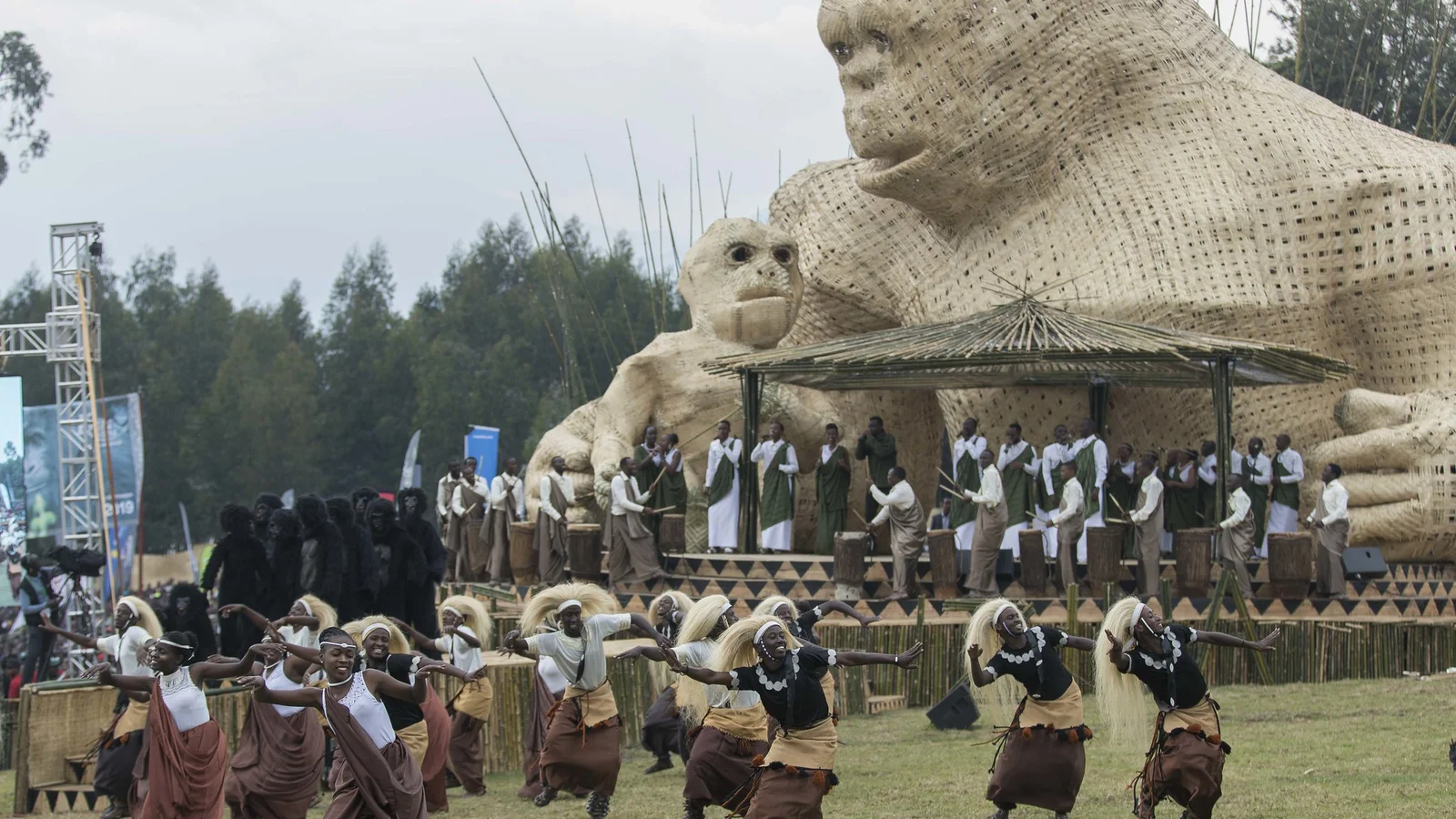
The ceremony itself is colorful and emotional. Thousands of people gather at Kinigi to witness the naming event. Traditional dancers perform the famous Intore dance, drummers create vibrant rhythms, and cultural groups showcase Rwanda’s rich heritage. Community members, schoolchildren, conservation partners, diplomats, and tourists all participate in the celebration. The atmosphere combines excitement, national pride, and environmental awareness in a unique way rarely seen at conservation events elsewhere in the world.
7. The “Namers”: Global Figures Supporting Gorilla Conservation
One of the major attractions of Kwita Izina is the participation of internationally recognized guests known as “Namers.” These are distinguished individuals invited to give names to the newborn gorillas. Past namers have included global leaders, scientists, conservationists, athletes, musicians, actors, and royalty. Celebrities such as Idris Elba, Danai Gurira, and King Charles III have participated in previous editions. Their involvement brings international media attention to gorilla conservation and Rwanda’s tourism industry.
8. Gorilla Tourism and Rwanda’s Sustainable Development
Kwita Izina is also important economically. Gorilla tourism is one of Rwanda’s biggest sources of tourism revenue. Thousands of international visitors travel to Rwanda every year specifically to trek mountain gorillas. Revenue generated from gorilla permits and tourism supports conservation programs, park management, infrastructure development, and local communities. Rwanda reinvests part of the tourism income into nearby villages through schools, roads, health centers, and clean water projects. This community-centered approach helps local residents benefit directly from conservation efforts.
9. Empowering Communities Around Volcanoes National Park
Community participation is one of the strongest pillars of the ceremony. Villages surrounding the national park play a major role in conservation success. Local people are encouraged to protect wildlife because tourism creates jobs and economic opportunities. Many residents work as guides, porters, hotel staff, artisans, performers, or park employees. Through Kwita Izina, Rwanda publicly recognizes the contribution of these communities to gorilla protection. This has strengthened cooperation between conservation authorities and local populations.
10. Kwita Izina Week: Conservation, Tourism, and Sustainability
The 2026 edition is expected to attract even greater international attention because Rwanda continues positioning itself as a global leader in sustainable tourism and environmental protection. Conservation forums, exhibitions, educational programs, and tourism conferences are expected to accompany the ceremony during “Kwita Izina Week.” These side events create opportunities for experts to discuss biodiversity protection, climate change, eco-tourism, and sustainable development strategies for Africa and beyond.
11. Kwita Izina and Rwanda’s Journey of Transformation
Kwita Izina has become more than just a gorilla naming event; it is now a symbol of Rwanda’s transformation and national identity. After the tragic history of the 1994 Genocide against the Tutsi, Rwanda has rebuilt itself through unity, environmental stewardship, and economic development. The success of mountain gorilla conservation reflects the country’s resilience and determination. Many international observers see Kwita Izina as an example of how conservation can contribute to peace-building, national pride, and socio-economic growth.
12. Inspiring the Next Generation Through Environmental Education
Environmental education is another major component of the ceremony. Schools and youth organizations participate in awareness campaigns focused on wildlife conservation and environmental responsibility. Young people learn about biodiversity, forest protection, and the importance of preserving endangered species for future generations. By involving children and students, Rwanda ensures that conservation values continue to grow within society.
13. International Partnerships for Gorilla Conservation
International conservation organizations also collaborate closely with Rwanda during Kwita Izina. Veterinary teams, wildlife researchers, environmental NGOs, and tourism stakeholders use the event as a platform to strengthen partnerships. Discussions often focus on protecting gorilla habitats, controlling diseases that affect gorillas, improving scientific research, and balancing tourism with environmental sustainability. The ceremony therefore serves both symbolic and practical conservation purposes.
14. Beyond the Ceremony: Experiences for Visitors
Tourists attending Kwita Izina 2026 will likely experience much more than the ceremony itself. Rwanda offers luxury lodges, eco-resorts, and safari experiences near the Virunga Mountains. Visitors can trek gorillas, hike volcanoes, visit lakes, explore Kigali city, and experience traditional Rwandan culture. Many tour operators organize special Kwita Izina travel packages that combine the naming ceremony with wildlife adventures and cultural experiences.
15. Kwita Izina’s Global Tourism and Media Impact
The global media coverage of Kwita Izina has helped transform Rwanda into one of Africa’s leading tourism destinations. Images of baby gorillas, traditional dancers, volcanic landscapes, and conservation celebrations are widely shared internationally. This visibility strengthens Rwanda’s international reputation as a safe, clean, environmentally conscious, and forward-looking country. Tourism campaigns connected to Kwita Izina continue to attract travelers from Europe, America, Asia, and across Africa.
16. Every New Gorilla Represents Hope
The naming of gorillas carries emotional significance because each baby gorilla represents hope for the survival of the species. Mountain gorillas remain endangered despite conservation success. Threats such as habitat pressure, disease transmission, illegal activities, and climate change continue to pose risks. Kwita Izina reminds the international community that conservation requires constant vigilance, funding, and cooperation. The celebration inspires global audiences to appreciate wildlife and support conservation initiatives.
17. Rwanda’s Conservation Model: People, Wildlife, and Development
Rwanda’s approach to conservation is often described as a model for Africa and the world. Instead of separating conservation from development, Rwanda integrates environmental protection with tourism, education, and community empowerment. Kwita Izina demonstrates how culture and conservation can work together effectively. By connecting ancient traditions with modern environmental goals, Rwanda has created a unique event that blends heritage, science, tourism, and sustainability into one powerful national celebration.
18. Kwita Izina 2026
As September 04th 2026 approaches, anticipation for the 21st edition of Kwita Izina continues to grow. Conservationists, travelers, photographers, journalists, and cultural enthusiasts are expected to gather once again at the foothills of the Virunga Mountains to celebrate newborn gorillas and Rwanda’s conservation achievements. The ceremony will likely continue inspiring global audiences while reinforcing the message that protecting nature is a shared responsibility for humanity. With Unique Africa Ventures, You Explore Like Never Before!