
Affordable Rwanda Safari Adventures Rwanda is one of Africa’s most rewarding destinations for travelers who…
Night Safaris in Akagera: Animals, Safety & Expectations Ultimate Guide
A night safari in Akagera National Park offers a completely different perspective from the traditional daytime game drive. As the sun disappears beyond the rolling hills and shimmering lakes, the African wilderness undergoes a dramatic transformation. Animals that spend the day resting beneath trees or hiding in thick vegetation begin to emerge, while daytime species gradually retreat into the darkness. The sounds also change, replacing daytime bird calls with the distant roars of predators, the chirping of insects, and the haunting calls of nocturnal birds. For travelers seeking an unforgettable wildlife experience in Rwanda, a guided night safari reveals an entirely hidden side of Akagera that few visitors fully appreciate.
Unlike daytime safaris, night drives focus on observing species that are naturally active after sunset. Guided by experienced park rangers and professional drivers equipped with powerful spotlights, visitors slowly explore designated roads in search of elusive nocturnal wildlife. The spotlight is carefully used to detect the reflective glow of animal eyes without causing unnecessary disturbance. Rangers understand animal behavior and know where predators are likely to patrol, increasing the chances of memorable sightings while ensuring wildlife remains undisturbed. Every night drive is different because nature follows no script, making each safari unique and exciting.
One of the greatest attractions during a night safari is the possibility of encountering large predators in action. African lion, reintroduced to Akagera after years of absence, become significantly more active after sunset. During cooler nighttime temperatures, lions often patrol their territories, communicate through deep roaring calls, or begin coordinated hunts. Witnessing a pride moving silently through the darkness creates an atmosphere unlike any daytime wildlife experience. Even hearing a distant roar echo across the plains becomes an unforgettable reminder that visitors are exploring one of Africa’s true wilderness areas.
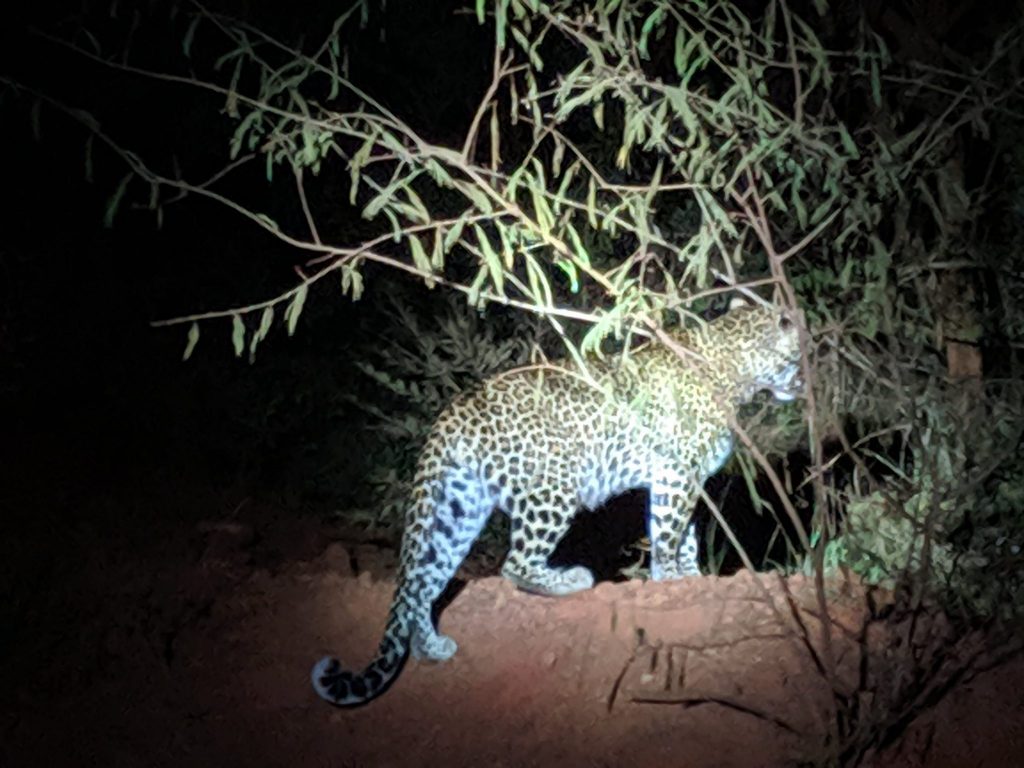
Another remarkable predator frequently seen during night safaris is the Leopard. These famously elusive cats spend much of the daytime concealed in dense vegetation or high in trees, making sightings relatively uncommon during daylight hours. After sunset, however, leopards become active hunters, using darkness as camouflage while stalking antelope and smaller mammals. Although sightings remain rare due to their secretive nature, Akagera’s growing leopard population has made nighttime encounters increasingly possible. Spotting one illuminated briefly by the safari spotlight is often considered one of the park’s greatest wildlife achievements.
Night drives also provide opportunities to observe smaller carnivores rarely encountered during the day. Species such as the Serval, African civet, Spotted hyena, and various mongoose species become noticeably more active after sunset. Hyenas frequently patrol roads searching for carrion or opportunities to steal prey from other predators. Civets quietly forage for fruits, insects, and rodents, while servals demonstrate remarkable hunting skills by listening carefully for movements beneath tall grass before making impressive leaps to capture prey.
Among the most fascinating nocturnal mammals are the park’s smaller creatures that many daytime visitors never notice. Bushbaby leap gracefully between branches with astonishing agility, their oversized eyes perfectly adapted for night vision. African hare frequently dash across roads illuminated by safari lights, while porcupines slowly wander through open areas searching for roots and vegetation. These animals may not possess the fame of elephants or lions, yet they contribute greatly to the richness of Akagera’s nighttime ecosystem and often become unexpected highlights for wildlife enthusiasts.
Birdwatchers also discover a different world during night excursions. Several nocturnal bird species become active only after darkness falls. Visitors may hear or occasionally observe Verreaux’s eagle-owl perched silently in large trees, scanning the landscape for rodents and reptiles. Nightjars rest almost invisibly on dirt roads before suddenly taking flight as safari vehicles approach. Their camouflage and unusual behavior make them especially fascinating for photographers and bird enthusiasts interested in documenting Africa’s lesser-known avian species.
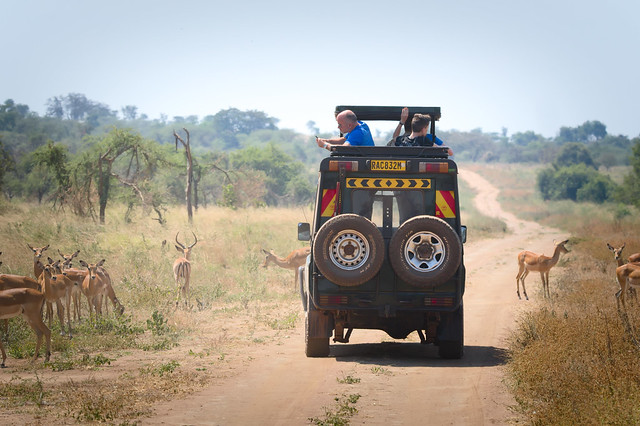
Large herbivores remain highly visible throughout the night, although their behavior often differs significantly from daytime patterns. African elephant frequently continue feeding after sunset, taking advantage of cooler temperatures. Cape buffalo gather in defensive groups while remaining alert for predators. Masai giraffe move gracefully between acacia trees, browsing quietly under moonlight. Antelope species such as impalas, topis, and waterbucks often remain especially vigilant, constantly monitoring their surroundings for approaching predators.
Safety is a central priority during every official night safari in Akagera. Visitors are always accompanied by trained guides or park rangers who possess extensive knowledge of animal behavior, road conditions, and emergency procedures. These professionals understand how wildlife reacts to vehicles and maintain appropriate distances to minimize stress for animals while protecting guests. Night safaris operate under carefully established park regulations that prioritize both visitor safety and wildlife conservation. Independent nighttime driving inside the park is generally not permitted, ensuring that all after-dark activities remain well managed.
Guests should expect to remain inside the safari vehicle throughout the excursion unless specifically instructed otherwise by guides in designated safe areas. Unlike walking safaris, night drives involve close encounters with potentially dangerous wildlife including lions, buffaloes, elephants, and occasionally hippos crossing roads. Staying seated, keeping arms inside the vehicle, and avoiding sudden movements help maintain a calm environment that allows animals to behave naturally. Flash photography is generally discouraged because repeated bright flashes can disturb wildlife and reduce the quality of observations.
The use of specialized spotlights represents one of the defining features of a night safari. Rangers carefully sweep the landscape with controlled beams to detect reflective animal eyes without continuously shining directly into their faces. Different species often display unique eye colors when illuminated, helping experienced guides identify animals even before their body shape becomes visible. Visitors are frequently amazed by how a seemingly empty landscape suddenly reveals multiple animals once the spotlight passes across the vegetation.
Weather conditions also influence the overall experience. During cooler evenings, wildlife often becomes more active, increasing opportunities for sightings. Seasonal rainfall can affect road accessibility, although Akagera’s management carefully monitors conditions before authorizing nighttime excursions. Travelers should dress in warm layers because temperatures after sunset can become surprisingly cool, especially during extended drives through open grasslands. Bringing a light jacket, binoculars, and a camera capable of performing well in low-light conditions greatly enhances the overall experience.
Expectations should remain realistic despite the excitement surrounding night safaris. Wildlife cannot be predicted or guaranteed, and even experienced guides cannot promise sightings of specific predators. Some nights may produce extraordinary encounters involving lions, leopards, hyenas, and elephants within a few hours, while others may focus more on smaller mammals, nocturnal birds, or fascinating animal behaviors. The unpredictability is part of what makes every safari authentic and rewarding. Rather than chasing a checklist of species, visitors often gain greater appreciation by observing how the ecosystem functions after dark.
Photography during night safaris presents both challenges and rewards. Low-light conditions require cameras with good high-ISO performance, fast lenses, or specialized settings to capture sharp images. Many photographers prefer simply experiencing the moment instead of constantly adjusting camera equipment. Guides often position vehicles strategically to provide stable viewing angles while minimizing disturbance to wildlife. Even when photographs prove difficult, the memories of hearing a lion roar nearby or watching a leopard disappear silently into the darkness remain vivid long after the safari ends.
A night safari in Akagera National Park is far more than an extension of a daytime game drive. It is an immersive journey into a world that only comes alive after sunset, where every sound, shadow, and movement carries new meaning. From powerful predators beginning their nightly hunts to tiny nocturnal creatures hidden among the grasses, the experience showcases the incredible diversity of Rwanda’s wildlife. With professional guides, strict safety measures, and realistic expectations, visitors can enjoy one of East Africa’s most memorable safari adventures while gaining a deeper understanding of the natural rhythms that shape life in Akagera. With Unique Africa Ventures, You Explore Like Never Before!
For more Info, CONTACT US TODAY AND TALK WITH TOUR CONSULTANT:
Call or WhatsApp: +250 794 128 369
Related Posts