
Rwanda Safari with Cultural and Community Experiences Discover Rwanda Beyond the Safari A Rwanda safari…
Hiking Volcanoes in Rwanda – Bisoke, Muhabura & Karisimbi
Rwanda is often called the “Land of a Thousand Hills,” but for hikers and mountaineers it could just as easily be called the land of volcanoes. In the far northwest of the country, along the border with Uganda and the Democratic Republic of Congo, rises the dramatic chain of the Virunga Mountains. These ancient volcanoes dominate the skyline with jagged ridges, bamboo forests, alpine meadows, and mist-covered peaks. Among the most famous volcanoes in Rwanda are Mount Bisoke, Mount Muhabura, Mount Sabyinyo, Mount Gahinga and Mount Karisimbi. Each mountain offers a different hiking experience, from moderate one-day climbs to challenging multi-day expeditions through dense forests and volcanic landscapes. Together, they form one of East Africa’s most exciting trekking destinations.
The Virunga volcanoes are part of a larger mountain chain that stretches across Rwanda, Uganda, and the Democratic Republic of Congo. These mountains were formed by volcanic activity along the Albertine Rift, a branch of the East African Rift system. Over millions of years, eruptions created towering cones and fertile volcanic soils that now support rich biodiversity. Today, the region is protected within Volcanoes National Park, Rwanda’s most famous national park. The park is internationally known for mountain gorilla conservation, but it is equally impressive for its hiking trails, scenic beauty, and unique ecosystems.
Hiking in Rwanda’s volcanoes is unlike trekking in many other parts of Africa because the trails combine adventure with exceptional biodiversity. As hikers ascend through the lower slopes, they pass thick bamboo forests filled with birds and golden monkeys. Higher elevations reveal giant lobelias, giant groundsels, moss-covered trees, and dramatic volcanic ridges. Clouds frequently drift across the mountains, creating a mystical atmosphere. During clear weather, hikers can see neighbouring volcanoes and even distant lakes shimmering in the valleys below.
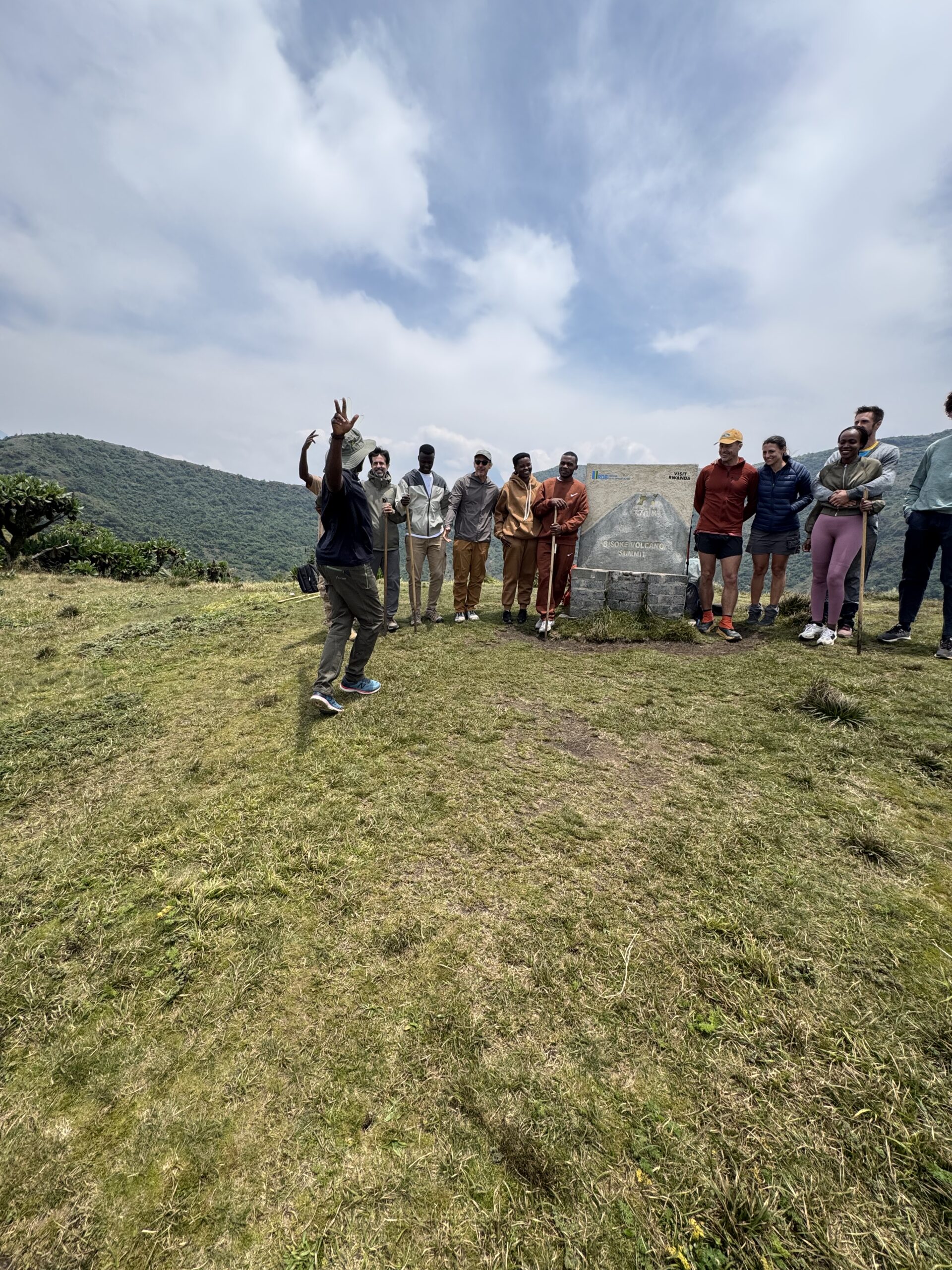
Mount Bisoke is perhaps the most popular volcano hike in Rwanda because it offers a rewarding adventure that can be completed in a single day. Rising to about 3,711 meters above sea level, Bisoke is known for its spectacular crater lake at the summit. The mountain’s steep slopes are covered in rainforest and bamboo, making the trail both scenic and challenging. The hike usually begins early in the morning from the headquarters of Volcanoes National Park near Musanze.
The trek up Bisoke takes approximately six hours round trip depending on weather conditions and hikers’ fitness levels. The lower part of the trail can be muddy, especially during Rwanda’s rainy seasons, and hikers often use walking sticks to maintain balance. Along the route, guides sometimes point out signs of mountain gorillas or forest elephants that inhabit the region. Although encounters are rare during the hike, the possibility adds excitement to the experience. As the climb continues, vegetation becomes thinner and temperatures cooler.
The summit of Bisoke is unforgettable. At the top lies a beautiful crater lake surrounded by steep volcanic walls and drifting clouds. On clear days, hikers enjoy panoramic views of the Virunga range stretching across Rwanda and into neighboring countries. The crater lake itself appears calm and mysterious, often reflecting the changing sky. Many hikers consider reaching the summit one of the most rewarding outdoor experiences in Rwanda because the journey combines physical challenge with extraordinary natural beauty.
While Bisoke is popular for day hikes, Mount Muhabura attracts hikers seeking a steeper and more demanding climb. Muhabura, which means “The Guide” in the local language, rises dramatically to approximately 4,127 meters. Its pointed cone shape makes it one of the most visually striking volcanoes in the Virunga chain. Historically, travelers and local communities used the mountain as a landmark because it could be seen from far away across the region.
The hike to Muhabura is physically demanding because of its steep ascent. Unlike Bisoke, which has stretches of forested paths, Muhabura involves long climbs up rugged slopes and rocky terrain. However, the effort is rewarded with some of the finest views in Rwanda. As hikers gain altitude, they can see the twin lakes of Burera and Ruhondo shining in the valleys below. The changing scenery from dense forest to open alpine terrain creates a dramatic sense of progression during the climb.
Reaching the summit of Muhabura is an achievement that many adventure travellers proudly remember. The top offers breathtaking 360-degree views across Rwanda, Uganda, and the Democratic Republic of Congo. On clear mornings, multiple Virunga volcanoes are visible, including Karisimbi and Sabyinyo. The summit area is often windy and cold, reminding hikers that they are standing above the clouds in one of East Africa’s highest volcanic regions.
Among Rwanda’s volcanoes, Mount Karisimbi is the giant of the Virunga range. At approximately 4,507 meters, it is the highest volcano in Rwanda and one of the tallest in East Africa. Karisimbi’s name comes from the Kinyarwanda word “amasimbi,” referring to the white snow-like appearance sometimes seen on its summit during colder months. Unlike Bisoke and Muhabura, Karisimbi usually requires a two-day trek with an overnight stay on the mountain.
The Karisimbi trek is considered one of the most adventurous hiking experiences in Rwanda. The journey begins in dense rainforest where hikers may hear birds singing and see signs of wildlife hidden among the vegetation. As the trail climbs higher, the landscape transforms into open moorland covered with giant lobelias and strange volcanic plants. Mist frequently rolls across the slopes, giving the mountain a mysterious atmosphere that many trekkers compare to a fantasy landscape.
One of the highlights of hiking Karisimbi is camping on the mountain. Trekkers usually spend the night at a basic campsite located at high altitude before attempting the final summit climb early the next morning. Nights on Karisimbi are extremely cold compared to the rest of Rwanda, and temperatures can drop close to freezing. Around the campsite, hikers gather to share stories, enjoy simple meals, and watch clouds drift below the mountain peaks under star-filled skies.
The summit push on Karisimbi is challenging because of the altitude and steep volcanic terrain. However, hikers who reach the top are rewarded with extraordinary views across the Virunga chain. Looking down from Karisimbi, neighboring volcanoes appear smaller beneath layers of clouds and mist. The sense of achievement is immense because the climb demands endurance, determination, and resilience. For experienced trekkers, Karisimbi is often the highlight of any adventure in Rwanda.
Hiking these volcanoes is not only about landscapes and physical challenge; it is also deeply connected to conservation. Rwanda Development Board and conservation organizations work together to protect the fragile ecosystems of Volcanoes National Park. Revenue from hiking permits and tourism supports wildlife protection, community projects, and anti-poaching efforts. The volcanoes are home to endangered mountain gorillas, golden monkeys, rare birds, and many unique plant species found nowhere else on Earth.
Local communities around the volcanoes also benefit from tourism. Many guides, porters, drivers, cooks, and lodge staff come from nearby villages. Hiring local porters is encouraged because it provides employment while helping hikers carry bags along muddy trails. Visitors often discover that Rwandan hospitality is one of the most memorable parts of the experience. Guides share stories about local culture, conservation history, and life around the Virunga Mountains, making the hikes educational as well as adventurous.
Preparation is essential for anyone planning to hike Bisoke, Muhabura, or Karisimbi. Proper hiking boots are necessary because trails can become slippery and muddy. Warm clothing is important, especially for Muhabura and Karisimbi where temperatures are much colder at higher altitudes. Rain jackets are recommended year-round since weather in the Virunga Mountains changes quickly. Many hikers also carry snacks, water, gloves, sunscreen, and walking sticks for additional comfort during the trek.
The best time for volcano hiking in Rwanda is generally during the dry seasons from June to September and from December to February. During these months, trails are less muddy and visibility is often better. However, Rwanda’s volcanoes can be visited throughout the year, and even rainy conditions add dramatic beauty to the forests and mountains. Mist, rain, and shifting clouds create an atmosphere that many photographers and nature lovers find unforgettable.
For travelers visiting Rwanda, combining volcano hiking with gorilla trekking creates an extraordinary adventure. After challenging climbs through volcanic forests, visitors can also spend time observing endangered mountain gorillas in their natural habitat within Volcanoes National Park. This combination of wildlife encounters and mountain trekking makes Rwanda unique among African travel destinations.
The volcanoes of Rwanda represent more than physical landmarks; they symbolize the country’s natural beauty, resilience, and commitment to conservation. Whether standing beside the crater lake of Bisoke, climbing the steep ridges of Muhabura, or camping beneath the summit of Karisimbi, hikers experience landscapes that are both wild and deeply inspiring. The Virunga Mountains leave lasting memories of mist-covered forests, dramatic peaks, and the powerful connection between nature and adventure in Rwanda. With Unique Africa Ventures, You Explore Like Never Before!
For more Info,CONTACT US TODAY AND TALK WITH TOUR CONSULTANT:
Call or WhatsApp: +250 794 128 369
Related Posts