
Chimpanzee Trekking Safety Rules in Nyungwe National Park: A Complete Guide for a Safe Rwanda…
Nyungwe Forest Safari for Photographers
Nyungwe Forest Safari for Photographers: A Complete Guide to Capturing Rwanda’s Wild Beauty
Introduction: Why Nyungwe Forest Is a Photographer’s Dream
A Nyungwe Forest safari for photographers is more than an ordinary wildlife trip. It is an opportunity to enter one of Africa’s most remarkable ancient forests and photograph a world filled with misty mountains, towering trees, colorful birds, playful primates, butterflies, orchids, and dramatic natural landscapes. Nyungwe Forest photography is truly exceptional because the setting offers endless opportunities for striking images. Located in southwestern Rwanda, Nyungwe Forest National Park is one of the continent’s most important rainforest ecosystems and offers a completely different photographic experience from the open savannah landscapes commonly associated with African safaris. Here, the scenery is intimate, atmospheric, mysterious, and constantly changing. Morning mist can drift between the trees, shafts of sunlight can illuminate the forest floor, and the sound of monkeys and birds can turn an ordinary trail into an unforgettable photographic adventure.
Discovering Nyungwe Forest National Park Through a Camera Lens
For photographers, Nyungwe is a destination where patience and observation are rewarded. The forest does not always reveal its wildlife immediately, and that is part of its charm. Instead of simply driving across open plains looking for large animals, visitors often walk through dense vegetation and listen carefully for movement in the canopy. A branch shaking above you may signal a troop of monkeys, while a sudden bird call can lead to a beautiful but fleeting photographic opportunity. Nyungwe Forest photography is therefore about much more than taking pictures of animals. It is about documenting the atmosphere of the rainforest, the relationship between wildlife and habitat, and the small details that make this ecosystem unique.
Chimpanzee Photography in Nyungwe Forest
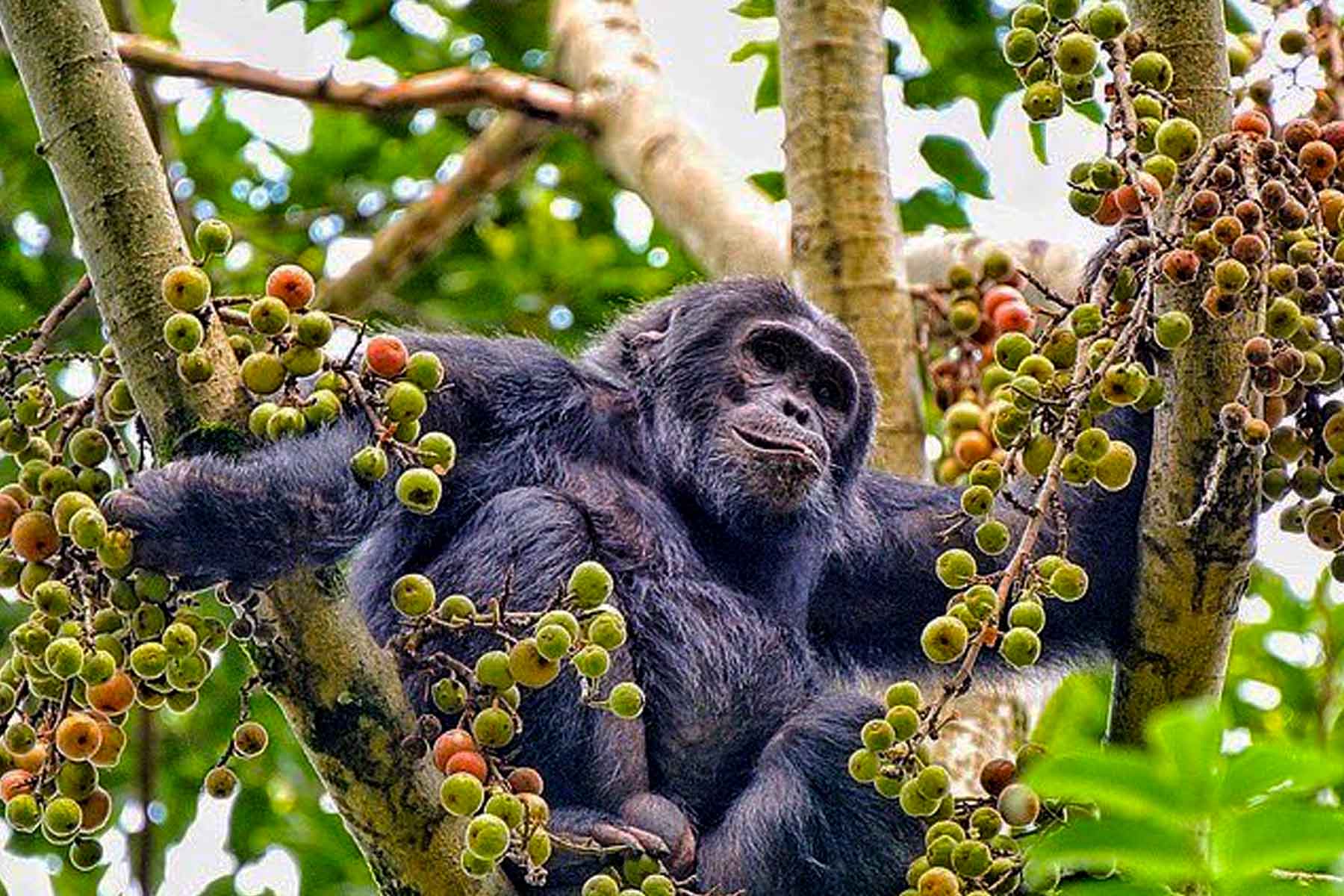
One of the biggest attractions for wildlife photographers is chimpanzee trekking in Nyungwe. Chimpanzees are intelligent, expressive, and highly active primates, making them fascinating photographic subjects. They may move quickly through the trees, sit quietly while feeding, groom one another, or interact with members of their social group. Photographing chimpanzees requires flexibility because their behavior and location can change rapidly. A long lens is extremely useful when animals remain high in the canopy, while a faster shutter speed can help freeze movement as they swing or jump between branches. Photographers should also be prepared for difficult lighting because dense rainforest vegetation often creates strong contrasts between bright patches of sky and shaded areas beneath the canopy.
Capturing Rwanda’s Primate Diversity
Chimpanzees are only part of the photographic story. Nyungwe is famous for its remarkable primate diversity, and photographers may encounter several monkey species during their forest adventures. Depending on the location and activity of the animals, opportunities can include photographing colobus monkeys, L’Hoest’s monkeys, mangabeys, and other forest primates. Each species has different behavior and visual characteristics, giving photographers the chance to create a diverse wildlife portfolio. Rather than photographing every animal as a simple portrait, try to capture behavior: a mother caring for her young, a monkey feeding on forest fruit, animals interacting with each other, or a primate silhouetted against the green canopy.
The Magic of Black-and-White Colobus Photography
The Ruwenzori black-and-white colobus monkeys are among the most visually striking subjects in Nyungwe Forest. Their contrasting black and white coats can stand out beautifully against the deep green vegetation, especially when soft morning light filters through the canopy. Colobus monkeys are also known for their movements through the treetops, which can create dynamic compositions. A photographer may capture a single animal sitting on a branch, several individuals moving together, or a dramatic silhouette against a brighter section of forest. When photographing these monkeys, it is often worth waiting rather than immediately taking dozens of pictures. A few carefully composed frames can tell a stronger story than a large collection of similar images.
Bird Photography in Nyungwe Forest
For bird photographers, Nyungwe Forest birdwatching and photography can be exceptionally rewarding. The forest supports a rich variety of birdlife, including species that are strongly associated with the Albertine Rift. Colorful plumage, unusual calls, forest behavior, and challenging canopy conditions make bird photography here both exciting and demanding. A telephoto lens is essential for distant birds, but photographers should also pay attention to the surrounding environment. A bird perched among moss-covered branches or framed by rainforest leaves can create a much more compelling image than a tightly cropped portrait. Early mornings are particularly valuable because bird activity is often high and the softer light can give photographs a beautiful natural quality.
Photographing the Ancient Rainforest Landscape
Wildlife should not be the only focus of a Nyungwe photography safari. The forest itself deserves to become a major subject. Ancient trees, tangled vines, moss-covered trunks, giant ferns, streams, mountain slopes, and layers of vegetation provide endless opportunities for landscape and environmental photography. Wide-angle lenses are useful for showing the scale and density of the forest, while standard lenses can isolate interesting patterns and details. Try photographing pathways disappearing into the mist, tree trunks covered in moss, or beams of sunlight passing through the canopy. These images can help communicate what it actually feels like to stand inside one of Africa’s great montane rainforests.
The Nyungwe Canopy Walkway: A Unique Perspective for Photographers
The Nyungwe Canopy Walkway offers one of the most memorable photographic experiences in Rwanda. Suspended high above the forest floor, the walkway provides an entirely different perspective of the rainforest. Instead of looking upward from beneath the canopy, photographers can look across the treetops and mountain landscapes. On clear days, distant hills may appear beyond the forest, while misty weather can transform the landscape into a moody, almost dreamlike scene. The walkway is particularly valuable for photographers interested in landscape, environmental storytelling, and forest panoramas. A moderate zoom lens can be useful here because it allows you to move between wider environmental photographs and more intimate details.
Best Time for a Nyungwe Forest Photography Safari
Choosing the best time to visit Nyungwe Forest for photography depends on the type of images you want to create. The forest remains green throughout the year, and rain can occur at any time because of its rainforest climate. Wet conditions are not necessarily a disadvantage for photographers. In fact, rain can make the forest more atmospheric, intensify colors, create reflections, and produce beautiful mist. Photographers who enjoy dramatic landscapes may deliberately welcome cloudy and rainy conditions. Those primarily interested in wildlife action may prefer periods when trails are more manageable and visibility is favorable. Instead of searching for perfect weather, it is often better to prepare for changing conditions and learn to use the forest’s natural atmosphere creatively.
Early Morning Light in Nyungwe
Early morning is one of the most rewarding times for wildlife photography in Rwanda. The forest can be quiet, cool, and covered in mist, creating an atmosphere that is difficult to reproduce anywhere else. Soft morning light is also kinder to photographs than harsh midday sunlight. If wildlife appears in a clearing or on an exposed branch, the low-angle light can add warmth and depth to the image. Morning excursions also give photographers the opportunity to capture the forest waking up, with birds becoming active and primates beginning their daily movements. Arriving prepared with charged batteries, memory cards, appropriate clothing, and camera settings already adjusted for low light can make a major difference.
Photography Equipment for a Nyungwe Safari
Packing the right camera equipment for Nyungwe Forest is important because rainforest photography presents different challenges from traditional safari photography. A telephoto lens, such as a 100–400mm or similar focal range, can be useful for distant primates and birds. A wide-angle lens is valuable for landscapes, forest interiors, and the canopy walkway. A versatile standard zoom can cover many situations when changing lenses is inconvenient. Extra batteries and memory cards are essential, particularly on full-day excursions. Because the environment can be wet, photographers should also carry protective equipment for their cameras and lenses. A simple waterproof camera cover or dry bag can provide valuable protection when rain arrives unexpectedly.
Protecting Your Camera from Rain and Humidity
The tropical environment of Nyungwe means that rainforest photography equipment protection should be taken seriously. Humidity can affect cameras, lenses, memory cards, and other electronic equipment, while sudden rain can arrive during a trek. Keeping a waterproof bag or protective cover accessible is better than packing it at the bottom of your backpack. Lens cloths are also extremely useful because raindrops and condensation can quickly interfere with image quality. When moving between significantly different temperatures, allow your equipment to adjust gradually to reduce condensation problems. Good preparation means you can concentrate on wildlife and composition instead of worrying about whether your camera will survive the weather.
Photographing in Low-Light Forest Conditions
One of the biggest technical challenges in Nyungwe wildlife photography is low light. The forest canopy can block much of the available sunlight, particularly in the early morning or beneath dense vegetation. Increasing ISO may be necessary, especially when photographing moving animals. A fast lens with a wide maximum aperture can help maintain faster shutter speeds without excessively increasing ISO. However, photographers should avoid becoming obsessed with technical perfection. A slightly grainy photograph that captures an extraordinary moment can be far more valuable than a technically perfect image with no story. The goal should always be to balance shutter speed, aperture, ISO, and the available light according to the behavior of the subject.
Wildlife Photography Ethics in Nyungwe
Responsible photography is an essential part of a Nyungwe Forest safari. Wildlife should never be pressured simply to obtain a better photograph. Visitors should follow the instructions of guides and park authorities, maintain appropriate distances, avoid disturbing animals, and never attempt to attract wildlife by making noises or offering food. Primates are particularly sensitive to human interaction and disease transmission, so following established trekking guidelines is extremely important. Ethical wildlife photography places the welfare of the animal before the photograph. The best images are those created while respecting the natural behavior of the subject and protecting the environment for future generations.
Working With a Local Photography Guide
A knowledgeable local guide can dramatically improve your Nyungwe photography safari experience. Guides understand the forest environment, recognize animal calls, know trails and frequently used areas, and can help visitors interpret animal behavior. Their knowledge can be especially valuable when photographing elusive primates or birds. A photographer may have excellent equipment but still miss an opportunity because they do not recognize the signs that an animal is nearby. Local guides also provide cultural and ecological context, helping photographers understand what they are seeing rather than simply collecting photographs. Building a good relationship with your guide and communicating your photographic goals before an excursion can make the experience much more productive.
Composition Tips for Nyungwe Forest Photography
The dense vegetation of Nyungwe creates both opportunities and challenges for composition. It is easy to produce cluttered images because branches, leaves, vines, and shadows can surround a subject. Look for natural frames created by foliage, openings in the canopy, or contrasting colors that help separate the subject from the background. Negative space can also be effective, especially when photographing an animal surrounded by the vastness of the forest. Instead of always placing the subject in the center, experiment with the rule of thirds and diagonal lines created by branches. Most importantly, slow down and observe the scene before pressing the shutter. The rainforest contains visual patterns everywhere, and careful composition can turn a difficult environment into a powerful photographic setting.
Macro Photography in Nyungwe Forest
Photographers interested in macro photography in Rwanda will find plenty to explore in Nyungwe. After rain, the forest can become especially interesting for close-up photography. Tiny insects, colorful butterflies, mushrooms, droplets of water, moss, flowers, and intricate plant structures can reveal a completely different world beneath the larger wildlife experience. A macro lens is ideal, but even a standard zoom lens can capture interesting details when used carefully. Look for textures and repeating patterns, and pay attention to how water droplets interact with leaves. Macro photography can also be an excellent activity during periods when larger wildlife is difficult to find.
Landscape Photography in the Albertine Rift
Nyungwe forms part of the broader Albertine Rift landscape, a region renowned for exceptional biodiversity and dramatic terrain. Mountain ridges, valleys, forest-covered slopes, and changing weather create opportunities for landscape photographers who are willing to wait for the right conditions. Mist can be especially powerful because it creates layers in the landscape and adds a sense of depth. Rather than trying to photograph everything in one frame, identify a strong foreground, middle ground, and background. A winding trail, distinctive tree, or ridge can provide a visual anchor that leads the viewer through the photograph.
Photographing the Forest in Rainy Weather
Many travelers worry that rain will ruin a Nyungwe Forest safari for photographers, but experienced photographers often see the opposite. Rain can make the forest look more alive. Leaves become glossy, colors become richer, mist develops between the trees, and water droplets create countless small photographic details. Rain also creates a strong sense of atmosphere that is difficult to achieve on a perfectly sunny day. The key is preparation. Carry weather protection for your camera, wear suitable clothing, and keep your equipment accessible. If conditions become too wet for photography, take the opportunity to observe the forest rather than forcing the situation.
Planning a Photography-Focused Nyungwe Safari
A successful Nyungwe Forest photography tour requires more planning than a casual sightseeing visit. Photographers should think about the subjects they want to prioritize, the type of equipment they will carry, the amount of time available, and the physical demands of forest trails. Chimpanzee trekking, birdwatching, hiking, landscape photography, and the canopy walkway can all be incorporated into a broader itinerary. Allowing extra time is particularly important because wildlife photography is unpredictable. An animal may appear for only a few seconds, while another encounter may require a long period of waiting. A flexible itinerary gives photographers more opportunities to respond to unexpected moments.
What Makes Nyungwe Different From a Traditional African Safari?
When people imagine an African safari, they often picture open grasslands, elephants, lions, giraffes, and large herds moving across the horizon. Nyungwe Forest safari offers something completely different. Here, the environment is dominated by trees, mountains, mist, and intimate wildlife encounters. The photographic challenge is therefore different as well. Instead of relying on wide-open views, photographers learn to work with layers, shadows, vegetation, and limited visibility. The reward is a collection of photographs that feels mysterious and personal. Nyungwe is particularly attractive to photographers who want to expand beyond conventional safari imagery and tell a deeper ecological story.
Combining Wildlife and Environmental Photography
A strong Rwanda wildlife photography portfolio should contain more than close-up animal portraits. Environmental images can show where animals live and how they interact with their surroundings. Photographing a chimpanzee within the forest canopy, a colobus monkey surrounded by branches, or a bird perched on a moss-covered tree can communicate far more about the ecosystem than a tightly cropped headshot. Environmental photography also helps create variety in a final collection or photo essay. When editing your photographs after the safari, try to select images that collectively tell a story: the landscape, the forest, the wildlife, the people who protect it, and the small details that make Nyungwe unique.
A Photographer’s Mindset: Patience Over Perfection
Perhaps the most important lesson for anyone planning a photography safari in Nyungwe Forest is to be patient. Rainforest wildlife rarely behaves according to a photographer’s schedule. An animal may remain hidden for hours before suddenly appearing in a perfect patch of light. Birds may move quickly between branches, and primates may disappear into thick foliage just as you prepare your camera. Instead of becoming frustrated, treat the waiting period as part of the experience. Watch, listen, and study the environment. Often, the most memorable photographs happen when the photographer is prepared for an unexpected moment.
Preserving the Experience Beyond the Photographs
Photography allows travelers to take memories home, but a Nyungwe safari should not become only a search for photographs. Take time to put the camera down and experience the forest directly. Listen to birds calling through the canopy, watch mist move across the mountains, and observe how the forest changes as the light shifts throughout the day. These experiences can later influence the way you edit and present your photographs. A meaningful Nyungwe Forest photography experience combines technical skill with curiosity, respect, and an appreciation for nature.
Why Nyungwe Belongs on Every Wildlife Photographer’s List
A Nyungwe Forest safari for photographers offers an extraordinary combination of wildlife, rainforest landscapes, birds, primates, mountain scenery, and atmospheric conditions. It challenges photographers to work creatively with low light, dense vegetation, unpredictable weather, and fast-moving subjects. At the same time, it rewards patience with images that feel intimate, wild, and authentic. Whether you are an experienced wildlife photographer building a professional portfolio or an enthusiastic traveler carrying your first serious camera, Nyungwe provides countless opportunities to develop your skills. The forest is not simply a place to photograph animals; it is a living ecosystem that encourages photographers to slow down, observe carefully, and tell the story of one of Rwanda’s most remarkable natural treasures. With Unique Africa Ventures, You Explore Like Never Before!
For more Info, CONTACT US TODAY AND TALK WITH TOUR CONSULTANT:
Call or WhatsApp: +250 794 128 369
Related Posts