
Rwanda Safari Experiences Beyond Wildlife: Discover the Soul of the Land of a Thousand Hills…
Nyungwe Forest Primate Species Beyond Chimpanzees
Nyungwe Forest Primate Species Beyond Chimpanzees
Discover the Hidden Primate World of Nyungwe Forest
When travelers think about primates in Rwanda, chimpanzee trekking is often the first experience that comes to mind. Yet beyond the famous chimpanzees lies an extraordinary world of monkeys and other primates waiting to be discovered in the ancient forests of Nyungwe National Park. Recognized as one of Africa’s oldest rainforests, Nyungwe is home to 13 primate species, making it one of Rwanda’s most rewarding destinations for wildlife enthusiasts, photographers, birdwatchers, researchers, and adventurous travelers.
For visitors who want more than a single wildlife encounter, a Nyungwe Forest primate safari offers an opportunity to explore a remarkably diverse ecosystem where black-and-white colobus monkeys move through the canopy, L’Hoest’s monkeys appear among the vegetation, blue monkeys travel through the forest, and owl-faced monkeys can sometimes be found along forest trails. The experience is not simply about ticking animals off a checklist; it is about entering an ancient Afromontane rainforest and learning how different primate species survive, communicate, feed, and interact within this remarkable environment.
Why Explore Nyungwe Primates Beyond Chimpanzees?
Nyungwe offers an exceptional opportunity to combine chimpanzee tracking with monkey watching and rainforest exploration. Rwanda’s official tourism information highlights colobus, golden, L’Hoest’s, owl-faced, Dent’s, blue and vervet monkeys, together with olive baboons, potto and bushbabies among the country’s primate diversity. Some of these species are particularly associated with Nyungwe, while others are found in different parts of Rwanda as well.
A dedicated Nyungwe primate tour allows travelers to slow down and appreciate the smaller encounters that can easily be missed during a fast-moving safari. A monkey calling from the treetops, a family moving quietly through dense vegetation, or a flash of black-and-white fur crossing the canopy can become one of the most memorable moments of a rainforest adventure. For tour companies, this makes Nyungwe ideal for clients seeking immersive wildlife experiences rather than conventional vehicle-based safaris.
Ruwenzori Black-and-White Colobus Monkeys
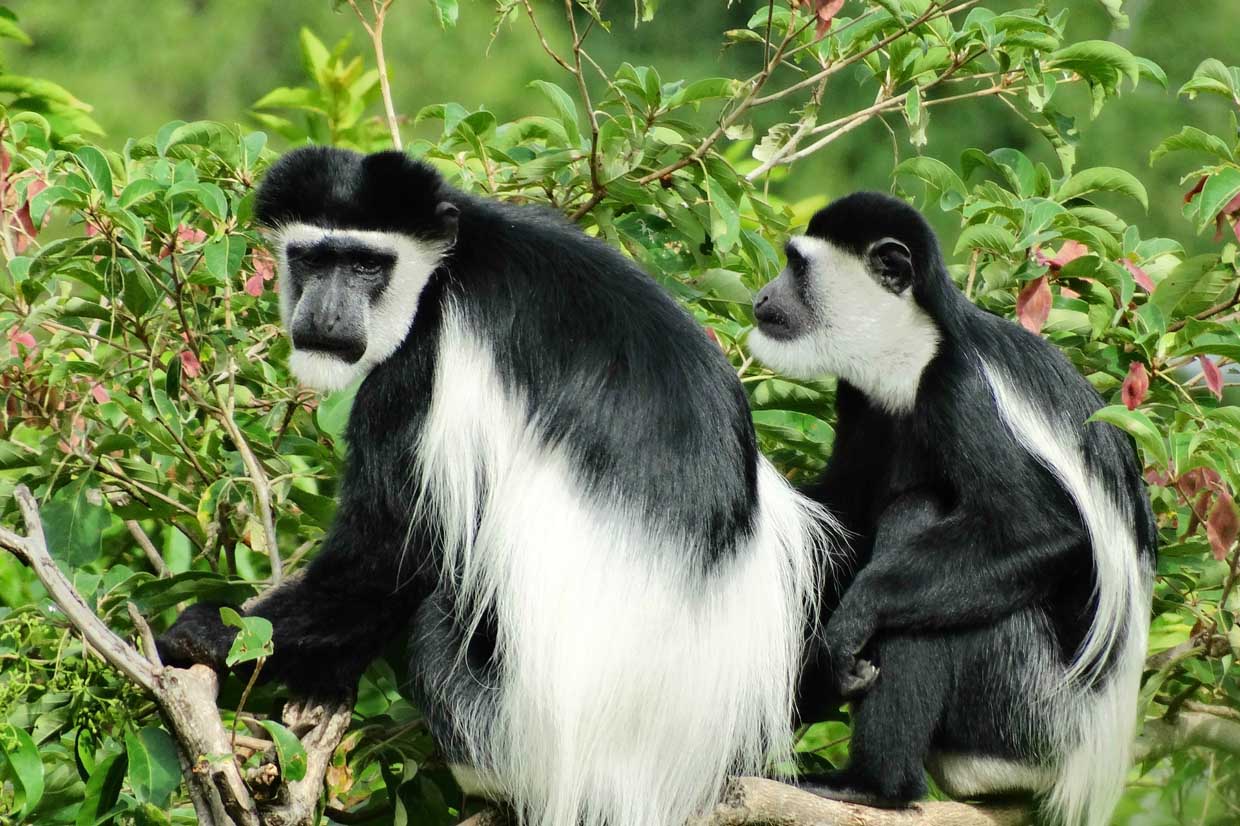
One of Nyungwe’s most spectacular primate attractions is the Ruwenzori black-and-white colobus monkey. With striking black-and-white coloration, long flowing hair and an unmistakable appearance, these monkeys are among the forest’s most photogenic residents. African Parks notes that a community of around 600 Rwenzori colobus has been observed in Nyungwe, described as the largest recorded primate group of its kind on the continent.
Watching a large colobus monkey troop in Nyungwe Forest can be an unforgettable wildlife experience. Their movements through the canopy create a dramatic spectacle as individuals leap between branches and gather high above the forest floor. Travelers interested in wildlife photography should keep their cameras ready, because the forest canopy can provide remarkable opportunities for photographing these distinctive primates against the lush green background of Nyungwe.
L’Hoest’s Monkey – An Albertine Rift Specialist
Another fascinating species to look for during a Nyungwe monkey tracking experience is the L’Hoest’s monkey. This attractive primate has a dark coat and distinctive pale or white facial and beard markings. Rwanda’s tourism authorities describe L’Hoest’s monkeys as associated with the Albertine Rift and note their presence in both Nyungwe and Gishwati forests.
L’Hoest’s monkeys are particularly interesting for travelers who want to understand the ecological importance of the Albertine Rift. Nyungwe forms part of this biologically rich region, where many species have restricted distributions. Encountering an L’Hoest’s monkey is therefore more than a simple wildlife sighting; it is an opportunity to observe a primate connected to one of Africa’s most important biodiversity landscapes. A knowledgeable local guide can help guests understand its behavior, habitat and role within the forest ecosystem.
Owl-Faced Monkeys of Nyungwe
The mysterious-looking owl-faced monkey, also known as Hamlyn’s monkey, is another primate that can make a Nyungwe wildlife adventure particularly rewarding. Its distinctive facial appearance gives it a name that immediately captures the imagination of visitors. Rwanda’s official tourism information specifically identifies owl-faced monkeys among the primates found in Nyungwe.
For wildlife enthusiasts, searching for an owl-faced monkey adds an element of discovery to a Nyungwe Forest primate safari. Unlike a predictable zoo encounter, rainforest wildlife is encountered on its own terms. Vegetation, weather, terrain and animal movements all influence what visitors see. This unpredictability is part of the attraction and makes every primate walk different.
Blue Monkeys in the Rainforest Canopy
The blue monkey is another species visitors may encounter while exploring Nyungwe. Despite its name, the animal does not appear bright blue; its coloration can look greyish or bluish depending on light and viewing conditions. These agile monkeys can move through the forest canopy and may sometimes be spotted while visitors are walking along Nyungwe’s trails or enjoying views from the canopy walkway.
A blue monkey encounter in Nyungwe can complement a chimpanzee trek beautifully. While chimpanzees attract much of the attention, blue monkeys remind visitors that Nyungwe’s primate diversity extends well beyond great apes. The official Rwanda tourism itinerary for primate experiences also highlights blue monkeys as animals that can be viewed from the forest canopy.
Dent’s Monkey – A Special Forest Encounter
Travelers exploring Nyungwe National Park wildlife may also have the opportunity to encounter Dent’s monkey. This lesser-known primate is particularly appealing to travelers who enjoy discovering wildlife that receives less international attention than chimpanzees or gorillas. Rwanda’s official tourism information lists Dent’s monkeys among the primates found in Nyungwe.
Because forest wildlife is not guaranteed on every trail or excursion, seeing a Dent’s monkey can feel especially rewarding. Experienced guides and trackers understand the forest environment and can help visitors interpret calls, movements, feeding behavior and signs of animal activity. This makes a guided Nyungwe primate walk much more informative than exploring the rainforest without specialist knowledge.
Vervet Monkeys and Rwanda’s Wider Primate Diversity
Vervet monkeys are also included among the primates highlighted by Rwanda’s tourism authorities, although visitors should understand that different primate species have different distributions within Rwanda. Nyungwe’s major attraction is its exceptional rainforest primate diversity, while other species are more commonly encountered in different habitats and national parks.
For tour operators, this creates an excellent opportunity to design multi-destination Rwanda primate safaris. A traveler can combine Nyungwe’s rainforest environment with other Rwandan landscapes to experience a broader selection of wildlife. Instead of selling Nyungwe only as a chimpanzee destination, tour companies can position the forest as a complete primate and biodiversity destination in Rwanda.
Potto and Bushbabies – Nyungwe’s Nocturnal World
Nyungwe’s primate story also includes animals that are rarely encountered during ordinary daytime walks. Rwanda’s tourism information highlights the potto and bushbabies among the country’s nocturnal primates. These animals are adapted to nighttime activity and are known for characteristics that help them navigate and feed in darkness.
For travelers fascinated by unusual wildlife, the idea of a Nyungwe nocturnal wildlife experience can add another dimension to a Rwanda itinerary. Nighttime rainforest ecosystems are dramatically different from those experienced during daylight hours. Sounds become more important, visibility changes and many creatures that remain hidden during the day become active after sunset. Availability and permitted activities should always be confirmed with park authorities and your tour operator before marketing or booking a specific night experience.
Nyungwe Is More Than a Monkey-Watching Destination
The greatest strength of a Nyungwe Forest safari is that primates are only one part of a much larger ecosystem. African Parks reports that Nyungwe contains more than 1,100 recorded plant species, hundreds of bird species and dozens of mammal species, including 13 primate species.
This biodiversity means that travelers can combine primate tracking, chimpanzee trekking, birdwatching, forest hiking, waterfall visits and the canopy walkway within one destination. A visitor may begin the day looking for chimpanzees, encounter colobus monkeys during a forest walk, hear unfamiliar bird calls and later stand above the treetops on the famous canopy walkway. This combination makes Nyungwe highly attractive to travelers who want a varied Rwanda wildlife holiday.
The Nyungwe Canopy Walkway and Primate Viewing
The Nyungwe Canopy Walkway offers a completely different perspective of the rainforest. Rwanda’s tourism authority describes the walkway as approximately 160 meters long and 70 meters above the forest floor, accessed through guided forest trails.
From this elevated position, visitors can look across the forest canopy and potentially observe birds, butterflies and primates using the upper levels of the rainforest. While wildlife sightings can never be guaranteed, the canopy experience adds an exciting dimension to a Nyungwe primate and canopy tour. It is especially attractive to photographers and travelers who want to experience the forest from above rather than only from ground-level trails.
A Paradise for Wildlife Photographers
For photographers, Nyungwe offers a combination of wild primates, dramatic rainforest landscapes, misty mountains, ancient trees and changing natural light. Black-and-white colobus monkeys can provide striking contrast against green vegetation, while blue monkeys and L’Hoest’s monkeys offer opportunities for more subtle forest portraits.
A successful Nyungwe wildlife photography tour is about patience. Animals may stay high in the canopy, move quickly through vegetation or disappear before a perfect photograph can be captured. Experienced guides can improve the experience by helping travelers understand animal behavior and identify promising viewing locations. Visitors should always prioritize animal welfare and follow guide instructions rather than attempting to approach or disturb wildlife for a photograph.
Why Book a Guided Nyungwe Primate Tour?
A guided experience can transform a forest walk into an educational wildlife adventure. The rainforest may initially appear to be a wall of green vegetation, but a trained guide can help travelers notice movement, calls, tracks, feeding signs and different layers of forest habitat.
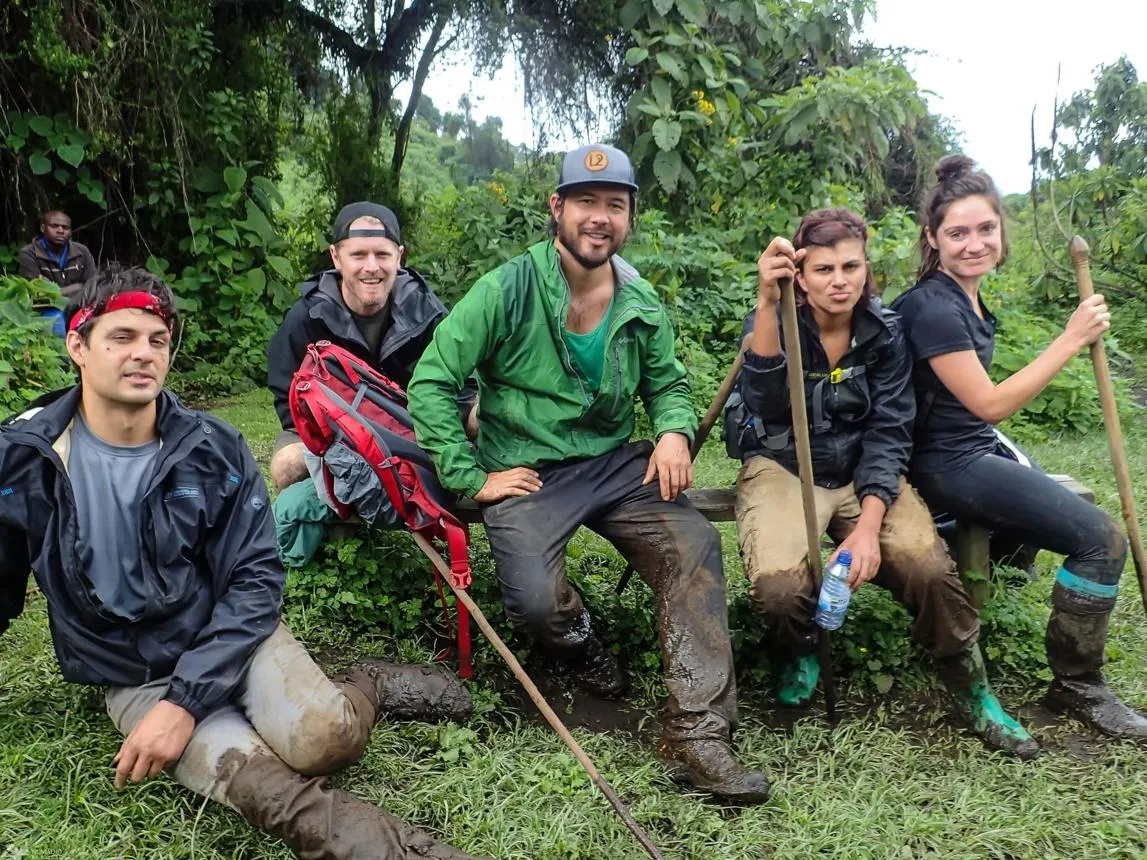
For travelers booking a Rwanda wildlife tour, this specialist knowledge is particularly valuable in Nyungwe. The forest terrain can be steep, slippery and muddy, especially after rain, and Rwanda’s tourism authority recommends suitable footwear for forest activities. A professional tour company can help coordinate transportation, permits where required, guides, accommodation and activities so visitors can concentrate on enjoying the forest.
Combine Chimpanzee Trekking With Other Primates
Chimpanzee trekking remains one of Nyungwe’s headline experiences, but travelers do not have to choose between chimpanzees and other primates. Combining chimpanzee tracking with monkey viewing creates a richer wildlife itinerary and gives visitors more time to appreciate the forest’s diversity.
Rwanda’s official tourism information notes that chimpanzee tracking generally begins early in the morning and that conditions can involve steep, slippery and muddy terrain. The location of chimpanzee communities also means sightings cannot be guaranteed. By adding additional forest walks, canopy experiences and biodiversity activities, travelers can enjoy Nyungwe even when their primary target species is difficult to locate.
A Perfect Destination for Primate Enthusiasts
Nyungwe is particularly well suited to travelers who are fascinated by African monkeys, great apes and rainforest ecology. Instead of focusing on one flagship animal, visitors can explore a community of species occupying different ecological niches within the same forest.
This makes a Nyungwe primate safari in Rwanda ideal for wildlife photographers, conservation travelers, students, researchers, birdwatchers and families seeking an educational nature experience. The destination also works exceptionally well for travelers who have already visited Rwanda’s mountain gorillas and want to discover another side of the country’s wildlife.
Nyungwe and the Albertine Rift Biodiversity Hotspot
One reason Nyungwe is so important is its position within the Albertine Rift, a region known for exceptional biodiversity and high levels of endemism. African Parks describes Nyungwe as a major biodiversity hotspot and notes that 13 primate species occur within the park.
For visitors, this ecological importance gives a primate encounter greater meaning. A trip to Nyungwe is not simply a wildlife holiday; it is an opportunity to experience a protected forest that supports a remarkable variety of species. Tour companies can incorporate conservation storytelling into their itineraries, helping guests understand why protecting rainforest habitats matters for Rwanda and for global biodiversity.
Responsible Primate Tourism in Nyungwe
Responsible tourism should be at the heart of every Nyungwe primate trekking experience. Wild animals should never be fed, chased or deliberately disturbed for photographs. Visitors should listen to their guides, maintain appropriate distances and respect park regulations.
Conservation management in Nyungwe is also connected to the wider protection of forest ecosystems and surrounding communities. African Parks has been involved in managing Nyungwe through a long-term partnership with the Rwandan government, with conservation and community development forming important parts of the management approach. Booking through a responsible tour operator helps travelers experience the forest while supporting a tourism model centered on conservation and local benefits.
The Forest Experience Beyond Wildlife
A Nyungwe National Park tour is not only about seeing animals. The forest itself becomes part of the adventure. Mist can drift between mountain ridges, enormous trees rise above the trails, streams cross the landscape and birds provide a constant soundtrack.
Travelers can combine primate experiences with forest hiking and waterfall trails. Rwanda’s tourism guide highlights Nyungwe’s network of trails and attractions such as Kamiranzovu and Ndambarare waterfalls. These additional experiences make it possible to create a balanced itinerary rather than spending the entire trip focused on one animal.
A Dream Destination for Birdwatchers and Primate Lovers
One of the strongest reasons to recommend Nyungwe to wildlife travelers is the combination of primate watching and birdwatching. Rwanda’s tourism authority describes Nyungwe as home to more than 300 bird species and numerous Albertine Rift specialties.
This means a traveler interested in monkeys does not have to sacrifice birdwatching opportunities. During a forest walk, guides can help identify both primates and birds, creating a multi-species wildlife experience. For specialist tour companies, this makes it possible to design Nyungwe birding and primate safaris that appeal to serious naturalists as well as first-time visitors.
When Should You Book a Nyungwe Primate Adventure?
Nyungwe can be explored throughout the year, but rainforest conditions are an important consideration when planning your trip. The forest receives significant rainfall, and trails can become wet and slippery. Rwanda’s tourism authority notes that the canopy walkway is open year-round and recommends suitable footwear and a lightweight raincoat.
Rather than promising guaranteed sightings, reputable tour companies should present primate viewing as a genuine wildlife experience influenced by weather, animal movements, habitat and seasonal conditions. The reward is the authenticity of seeing wild animals in their natural environment. A knowledgeable travel consultant can help select the most appropriate activities based on the traveler’s interests, fitness level and available time.
What to Expect on a Nyungwe Primate Walk
A typical Nyungwe primate walk involves entering the forest with a trained guide and spending time observing the vegetation and wildlife around the trail. Walks can range from relatively gentle nature experiences to more demanding hikes, depending on the chosen route and objective.
Travelers should be prepared for changing weather, uneven terrain and periods of walking without immediate wildlife sightings. Patience is essential. The excitement comes when a guide suddenly notices movement in the canopy, identifies a primate call or points toward a troop hidden among the leaves. Those spontaneous encounters are precisely what make rainforest wildlife experiences so memorable.
Plan Your Rwanda Primate Safari With Nyungwe at the Center
For travelers building a Rwanda primate safari itinerary, Nyungwe can be combined with other major attractions to create a diverse journey through the country. A multi-park itinerary can connect rainforest primates with mountain landscapes, cultural experiences, birdwatching and other wildlife activities.
Rwanda’s official tourism itineraries already promote combinations involving Nyungwe chimpanzee trekking, the canopy walkway and other primate experiences. A professional tour company can customize the journey according to your preferred travel style, including private tours, photography-focused trips, family holidays, luxury wildlife safaris and longer conservation-focused adventures.
Why Choose a Nyungwe Primate Safari?
Choosing Nyungwe means choosing a destination where chimpanzees are only the beginning. The forest supports an extraordinary collection of primates, including Ruwenzori black-and-white colobus, L’Hoest’s monkeys, owl-faced monkeys, blue monkeys and Dent’s monkeys, alongside other primate species identified by Rwanda’s tourism authorities.
For travelers looking for something deeper than a conventional wildlife holiday, Nyungwe delivers a combination of biodiversity, adventure, photography, hiking and conservation. Every trail offers the possibility of discovery, and every primate encounter provides a closer connection with one of Africa’s great rainforest ecosystems.
Book Your Nyungwe Forest Primate Adventure
Ready to explore Nyungwe Forest beyond chimpanzees? Let our experienced Rwanda safari team create a personalized Nyungwe primate safari, chimpanzee trekking adventure, colobus monkey tour, Rwanda wildlife holiday or Nyungwe canopy walkway experience around your travel dates and interests. We can help arrange permits and park activities, professional guiding, transportation, accommodation and complementary experiences such as birdwatching, forest hiking and waterfalls. A best primate tracking permits and other tourism services can be booked through authorized channels and tour operators.
Contact us today to plan your Nyungwe Forest adventure. Whether your dream is to photograph a spectacular colobus troop, search for elusive L’Hoest’s monkeys, explore the rainforest canopy, combine chimpanzee trekking with primate watching, or simply experience the ancient beauty of Nyungwe, our team can help turn your Rwanda wildlife holiday into an unforgettable journey. Request your personalized itinerary and start planning your Nyungwe primate safari today. With Unique Africa Ventures, You Explore Like Never Before!
For more Info, CONTACT US TODAY AND TALK WITH TOUR CONSULTANT:
Call or WhatsApp: +250 794 128 369
Related Posts