
Rwanda Safari for First-Time Visitors to Africa Discover Rwanda: Your Perfect Introduction to Africa If…
Gorillas in Rwanda vs Uganda – Key Differences for Travellers
Gorilla trekking is one of the most powerful wildlife experiences in the world, and both Rwanda and Uganda offer exceptional opportunities to encounter endangered mountain gorillas. However, while the core experience—tracking gorillas in misty forests—is similar, there are meaningful differences that can shape a traveler’s decision. Understanding these differences helps you choose the destination that best fits your budget, expectations, and travel style.
One of the most noticeable differences is cost. In Rwanda, gorilla trekking permits are significantly more expensive, typically priced around $1,500 per person. In Uganda, permits are much cheaper, often around $700. This price gap makes Uganda more appealing for budget-conscious travelers, while Rwanda positions itself as a premium, luxury wildlife destination.
The main trekking destination in Rwanda is Volcanoes National Park, located in the northwest near the border with Uganda and the Democratic Republic of Congo. In Uganda, the primary locations are Bwindi Impenetrable National Park and Mgahinga Gorilla National Park. Bwindi is especially for its dense jungle and larger number of habituated gorilla families.
Accessibility is another key factor. Rwanda has a clear advantage here because Volcanoes National Park is only about a 2–3 hour drive from Kigali. This makes it possible to arrive, trek, and return within a short timeframe. In contrast, reaching Bwindi in Uganda can take 8–10 hours by road from Kampala, or you may need a domestic flight, adding complexity and cost.
The trekking experience itself can differ in terrain and difficulty. Rwanda’s Volcanoes National Park generally has more open terrain and bamboo forests, which can make hiking somewhat easier. Uganda’s Bwindi, on the other hand, lives up to its name—“Impenetrable”—with thicker vegetation, steeper slopes, and more physically demanding hikes. For adventurous travelers, Uganda offers a more rugged experience.
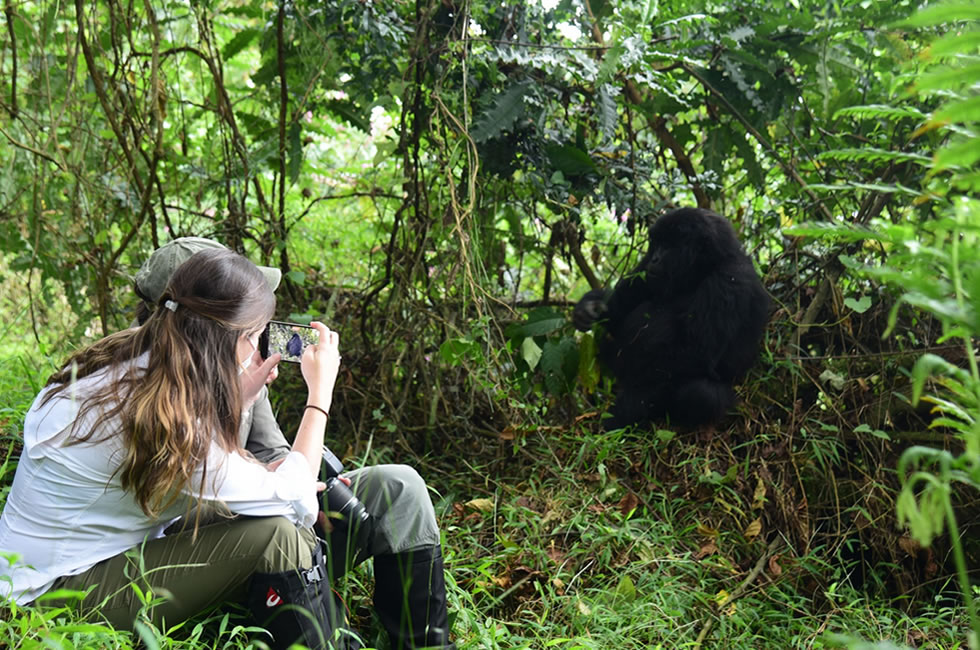
Group sizes and rules are similar in both countries. Treks are limited to small groups, usually up to eight people per gorilla family, and visits are capped at one hour once you find the gorillas. These regulations are designed to minimize stress on the animals and preserve their natural behavior.
Accommodation options vary in style and pricing. Rwanda leans heavily into luxury tourism, with high-end lodges and eco-resorts offering premium services, fine dining, and spectacular views of the volcanoes. Uganda also has luxury lodges but provides a wider range of mid-range and budget accommodations, making it more flexible for different types of travelers.
Scenery is another point of distinction. Rwanda’s Volcanoes National Park is characterized by dramatic volcanic peaks and relatively open landscapes. Uganda’s Bwindi offers dense rainforest, incredible biodiversity, and a more “deep jungle” feel. Both are stunning, but they provide different visual and emotional atmospheres.
Wildlife diversity beyond gorillas is richer in Uganda. Bwindi is home to hundreds of bird species and other primates, making it a hotspot for biodiversity enthusiasts. Rwanda’s park is more focused on gorillas and golden monkeys, though the overall ecosystem is still impressive.
Another factor is crowding and exclusivity. Rwanda’s higher permit cost naturally limits visitor numbers, creating a more exclusive and less crowded experience. Uganda sees more travelers due to its affordability, though the large size of Bwindi helps distribute visitors across different sectors.
Cultural experiences also differ slightly. In Rwanda, visitors often combine gorilla trekking with cultural visits around Kigali, including the powerful Kigali Genocide Memorial. In Uganda, travelers may engage with local communities near Bwindi, including Batwa cultural experiences that provide insight into indigenous forest life.
Safety and infrastructure are generally excellent in both countries, but Rwanda is often praised for its exceptionally clean cities, well-maintained roads, and strong tourism infrastructure. Uganda’s infrastructure is improving but can feel more remote and less polished in certain areas.
Time efficiency is a major consideration. If you have limited time, Rwanda is often the better choice due to its proximity to Kigali and ease of logistics. Uganda is better suited for longer itineraries where you can combine gorilla trekking with other national parks like Queen Elizabeth or Murchison Falls.
Permit availability can also influence your choice. Rwanda’s higher price sometimes means permits are easier to secure on shorter notice. Uganda’s permits, being more affordable, can sell out faster during peak seasons.
Photography conditions can vary. Rwanda’s more open terrain sometimes offers clearer views and better lighting conditions, while Uganda’s dense forest can make photography more challenging but also more atmospheric and dramatic.
Ultimately, the choice between Rwanda and Uganda depends on your priorities. If you value convenience, luxury, and a shorter trip, Rwanda is often the better fit. If you’re seeking a more budget-friendly, adventurous, and immersive jungle experience, Uganda stands out.
Many travellers even combine both countries in one itinerary, especially since the parks are geographically close. This allows you to experience the subtle differences first hand while maximizing your time in the region. For this option, apply east African tourist visa for affordability .
In either case, gorilla trekking is a once-in-a-lifetime experience. Whether you choose Rwanda or Uganda, the moment you lock eyes with a mountain gorilla in the wild is unforgettable—and worth every effort it takes to get there.
CONTACT US TODAY AND TALK WITH TOUR CONSULTANT:
Call or WhatsApp: +250 794 128 369
Related Posts