
Rwanda Safari Experiences Beyond Wildlife: Discover the Soul of the Land of a Thousand Hills…
Chimpanzee Trekking Difficulty Level in Nyungwe Explained
Chimpanzee Trekking Difficulty Level in Nyungwe Explained: A Complete Guide for Every Traveler
Chimpanzee trekking in Nyungwe National Park is one of Rwanda’s most exciting wildlife adventures. Unlike a traditional safari where animals are viewed from a vehicle, chimpanzee trekking takes visitors deep into one of Africa’s oldest montane rainforests in search of wild chimpanzees. The experience combines hiking, wildlife observation, birdwatching, and immersion in a pristine tropical ecosystem. While the adventure is unforgettable, many travelers wonder about one important question before booking: How difficult is chimpanzee trekking in Nyungwe?
The answer depends on several factors, including your fitness level, weather conditions, the location of the chimpanzee groups, and the terrain on the day of your trek. Some visitors complete the trek in less than two hours, while others spend several hours navigating steep forest trails before locating the chimpanzees. Understanding these variables helps you prepare physically and mentally, making your trekking experience far more enjoyable.
What Makes Chimpanzee Trekking in Nyungwe Challenging?
Chimpanzee trekking is naturally unpredictable because the chimpanzees are completely wild. Rangers locate them each morning by tracking their movements through the forest, meaning the trekking distance changes every day. Unlike animals confined to specific viewing areas, chimpanzees travel long distances in search of fruits, leaves, and other food sources.
This unpredictability is what makes the adventure authentic. Some mornings the chimpanzees may be relatively close to the park entrance, while on other days they may have moved several kilometers deeper into the rainforest. Visitors should therefore expect a genuine wilderness experience rather than a guaranteed short walk.
Understanding the Terrain of Nyungwe National Park
One of the biggest contributors to the difficulty level is the rugged landscape of Nyungwe National Park. The park sits within Rwanda’s mountainous southwestern region, with elevations ranging between approximately 1,600 and 2,950 meters above sea level.
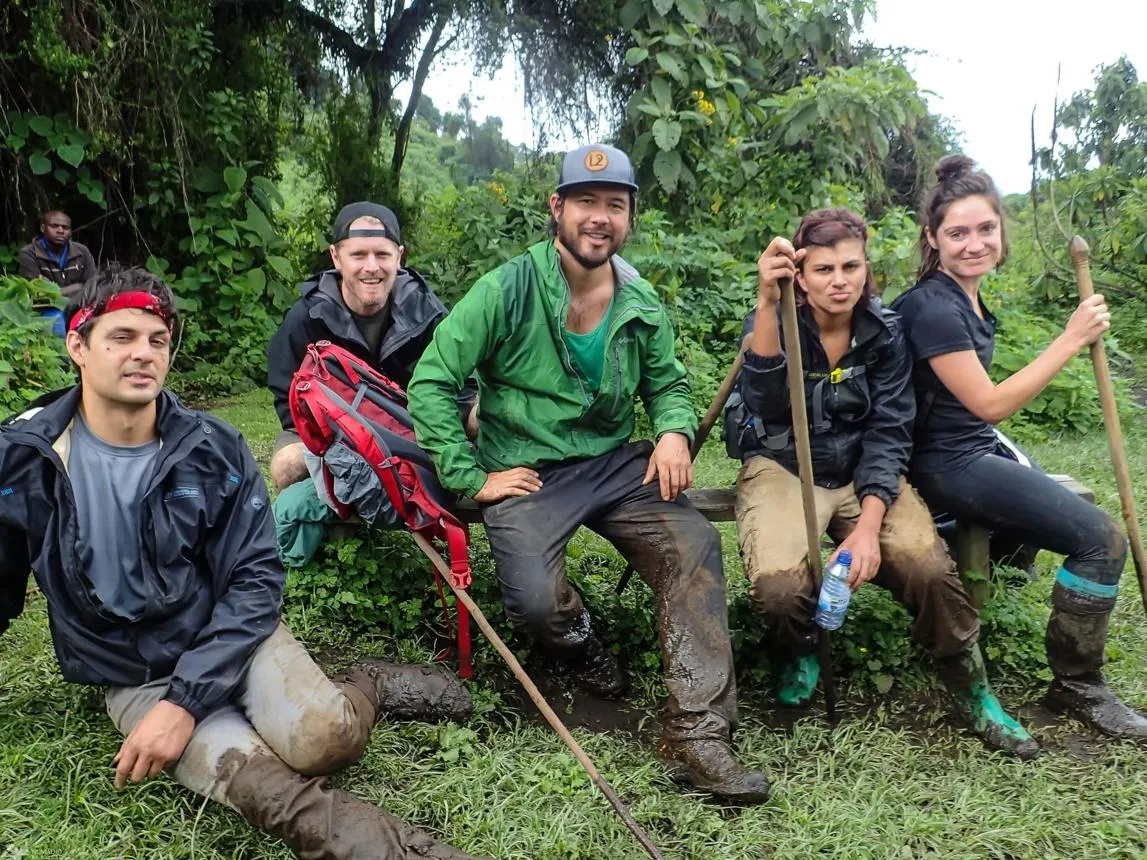
The rainforest features steep hills, narrow footpaths, exposed tree roots, muddy sections, dense vegetation, and occasional rocky slopes. During the rainy season, these trails become slippery, requiring extra caution while walking. The changing elevation also means trekkers frequently climb uphill before descending into valleys where chimpanzees are often found.
Despite these challenges, experienced park guides carefully lead visitors along the safest routes while providing support throughout the trek.
Average Trekking Duration
The length of a chimpanzee trek varies considerably depending on where the chimpanzees are located. On average, visitors spend between two and five hours inside the forest, although some treks may finish sooner while others take longer.
Once the chimpanzees are located, visitors are normally allowed approximately one hour to observe their fascinating behaviors. During this time, you may watch them feeding, grooming each other, climbing trees, communicating through loud vocalizations, and interacting within their family groups.
This observation period is often the highlight of the entire experience and makes the physical effort worthwhile.
How Physically Demanding Is the Trek?
Most travelers describe chimpanzee trekking in Nyungwe as moderately challenging rather than extremely difficult. Participants should be comfortable walking for several hours over uneven natural terrain. The trek involves frequent uphill climbs, downhill descents, and walking through dense rainforest vegetation.
You do not need to be an athlete to enjoy the activity. Individuals with average fitness levels successfully complete the trek every year. However, preparing with regular walking, hiking, or cardiovascular exercise before your trip can significantly improve your comfort during the experience.
Strong leg muscles, good balance, and basic endurance make navigating forest trails much easier.
Altitude Can Increase the Difficulty
Many visitors underestimate how much altitude affects physical activity. Since Nyungwe National Park lies at relatively high elevations, the thinner air may cause hikers to breathe more heavily than they would at sea level.
Travelers arriving directly from low-altitude countries may notice that climbing hills feels more strenuous during the first few days. Taking a steady pace, drinking plenty of water, and avoiding rushing up steep slopes helps reduce fatigue. Most visitors adapt quickly and find that careful pacing allows them to complete the trek comfortably.
Weather Conditions Affect Trekking Difficulty
Weather plays a major role in determining how challenging chimpanzee trekking becomes. Rwanda experiences two rainy seasons and two relatively dry seasons each year. During rainy months, forest trails become muddy, slippery, and more difficult to navigate.
Rain can also increase humidity, making hiking feel warmer despite the forest’s cool temperatures. Waterproof hiking boots with excellent grip become especially valuable under these conditions.
During the dry seasons, trails are generally firmer, allowing for easier walking and better footing. Nevertheless, occasional rain showers remain possible because Nyungwe is a tropical rainforest.
Is Chimpanzee Trekking Suitable for Beginners?
Yes, many first-time hikers successfully complete chimpanzee trekking in Nyungwe National Park. Park guides understand that visitors arrive with different fitness levels and hiking experience. They maintain a manageable pace while regularly checking on the group.
Beginners should prepare by walking several kilometers multiple times per week before traveling. Wearing proper hiking gear, carrying sufficient water, and listening carefully to guide instructions also contribute to a successful trek.
Confidence often grows as visitors become immersed in the beautiful rainforest surroundings.
Essential Hiking Gear for the Trek
Choosing the right equipment can dramatically improve your comfort throughout the trek. Waterproof hiking boots provide stability on uneven ground while protecting your feet from mud and moisture. Lightweight long trousers help prevent scratches from vegetation and reduce insect bites.
Long-sleeved shirts, rain jackets, gardening gloves for gripping branches, sunscreen, insect repellent, reusable water bottles, and small backpacks are equally useful. A walking stick, often provided by the park, offers additional balance during steep sections.
Proper clothing allows visitors to focus on the wildlife experience rather than physical discomfort.
Wildlife Encounters Beyond Chimpanzees
Although chimpanzees are the primary attraction, the trek offers countless opportunities to encounter other fascinating wildlife. Nyungwe National Park is home to numerous primate species, including colobus monkeys, L’Hoest’s monkeys, owl-faced monkeys, and vervet monkeys.
The rainforest also supports hundreds of bird species, colorful butterflies, orchids, giant ferns, and ancient trees that create an incredibly diverse ecosystem. These additional wildlife sightings help make every trek rewarding, even if the search for chimpanzees takes longer than expected.
Nature enthusiasts often appreciate the journey through the forest just as much as the final chimpanzee encounter.
Safety During Chimpanzee Trekking
Chimpanzee trekking is considered very safe because experienced park rangers accompany every group. Rangers know the forest exceptionally well and continuously monitor chimpanzee behavior to ensure visitor safety.
Participants receive a briefing before entering the forest covering appropriate behavior around wildlife, maintaining safe viewing distances, photography rules, and environmental conservation practices. Following these instructions helps protect both visitors and the chimpanzees.
The guides also communicate with trackers already inside the forest, allowing trekking groups to locate chimpanzees more efficiently.
Mental Preparation Is Just as Important
Many travelers focus only on physical preparation while overlooking the mental aspect of chimpanzee trekking. Patience is essential because locating wild animals takes time. Unlike zoo visits, wildlife encounters cannot be predicted or guaranteed at a precise location.
Approaching the trek with realistic expectations makes the experience more enjoyable. Every moment spent walking through one of Africa’s most biodiverse rainforests offers opportunities to appreciate nature, whether you are listening to birdsong, observing unique plants, or watching monkeys moving through the canopy.
The anticipation often adds excitement to the adventure.
Tips to Make the Trek Easier
Several simple strategies can reduce the overall difficulty of chimpanzee trekking. Begin hydrating well before the trek, eat a nutritious breakfast, and wear lightweight clothing suitable for hiking. Walk at a steady pace instead of trying to keep up with faster hikers.
Using trekking poles or walking sticks improves balance on slippery slopes. Taking small breaks during steep climbs helps conserve energy, especially at higher elevations. Packing only essential items also reduces unnecessary weight on your back.
These practical habits allow visitors to enjoy the experience with less fatigue.
Best Time for Easier Chimpanzee Trekking
Many travelers prefer visiting Nyungwe during Rwanda’s dry seasons because trail conditions are generally better. The months from June to September and December to February typically offer easier hiking due to reduced rainfall.
Although chimpanzee trekking operates throughout the year, dry weather usually means firmer trails, improved visibility, and more comfortable hiking conditions. However, the rainforest remains lush and beautiful regardless of the season, making every visit unique.
Travelers should remember that weather patterns can vary slightly from year to year.
Is the Trek Worth the Physical Effort?
Nearly everyone who completes chimpanzee trekking agrees that the experience is worth every step. Watching wild chimpanzees communicate, leap between trees, care for their young, and interact naturally within their forest habitat creates unforgettable memories.
The challenging hike enhances the sense of achievement because visitors know they have entered one of Africa’s most spectacular rainforests to witness wildlife in its natural environment. Few travel experiences combine adventure, conservation, photography, and close encounters with endangered primates so effectively.
For many visitors to Rwanda, chimpanzee trekking becomes the highlight of their entire journey.
Ultimately, Chimpanzee trekking in Nyungwe National Park is best described as a moderately challenging adventure that is accessible to most travelers with average physical fitness. The combination of mountainous terrain, rainforest trails, changing weather, and unpredictable chimpanzee movements creates a genuine wilderness experience that is both exciting and rewarding.
Preparation is the key to success. By wearing appropriate hiking gear, maintaining reasonable fitness, staying hydrated, and approaching the trek with patience and enthusiasm, visitors can confidently enjoy one of Rwanda’s most remarkable wildlife activities. Whether you are an experienced hiker or a first-time adventurer, the opportunity to observe wild chimpanzees in the ancient forests of Nyungwe is an experience that will remain with you for a lifetime. With Unique Africa Ventures, You Explore Like Never Before!
For more Info, CONTACT US TODAY AND TALK WITH TOUR CONSULTANT:
Call or WhatsApp: +250 794 128 369
Email: info@uniqueafricaventures.com
Related Posts